
Safety rules for installing ceiling fans
Installation height: ensuring safety and effectiveness
Minimum distance between blades and floor
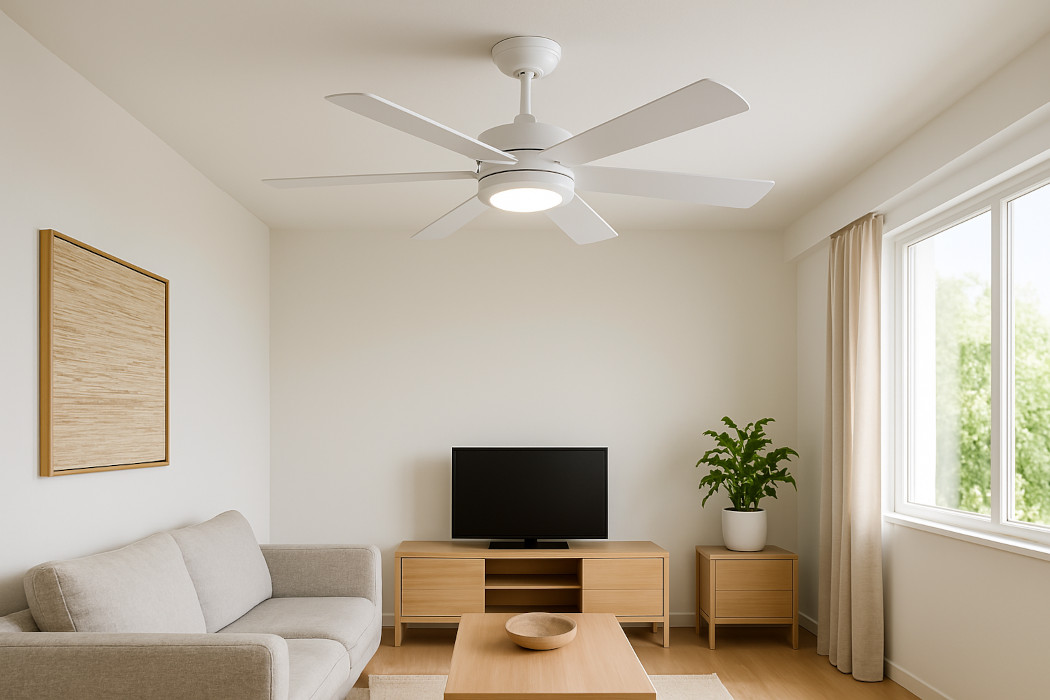
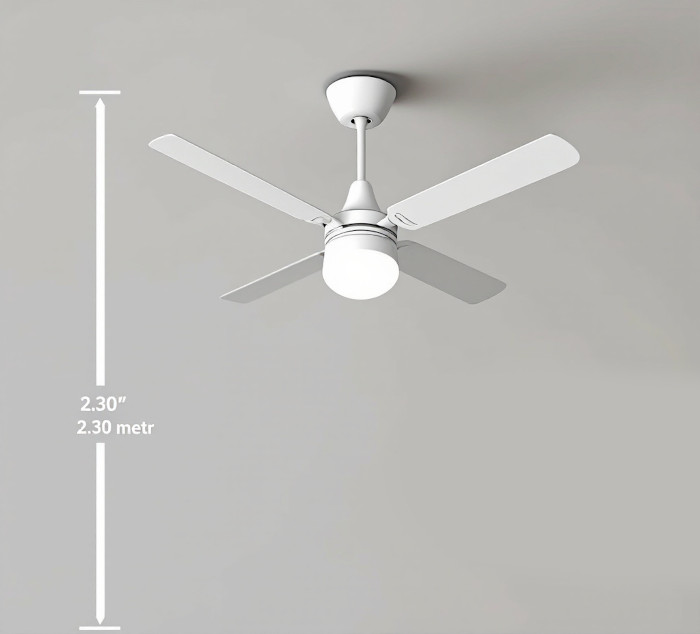
In accordance with the NF EN CEI 60335-2-80 standard, it is recommended that fan blades be installed at a minimum height of 2.30 metres above the floor. This measure is intended to prevent any risk of accidental contact with the moving blades, which is particularly important in rooms where occupants are likely to be close to the blades.
Ceiling height and compatibility with RE2020
RE2020 (French environmental regulation for new buildings) states that the ceiling fans taken into account must be compatible with ceiling heights of less than 3 metres. It is therefore crucial to consider the overall height of the unit during installation in order to maintain the minimum distance between blades and floor. Incorrect installation can lead to an increased risk of accidents or less effective operation of the equipment.
Electrical installation: ensuring compliance and safety
Compliance with current standards
All electrical connections must be made in accordance with the NF C 15-100 standard, which governs domestic electrical installations in France. This standard ensures that the installation meets strict safety criteria, particularly with regard to protection against short circuits, earth leakage and the risk of electric shock.
Use of a qualified professional
It is strongly recommended to use a qualified electrician for the installation. A professional will not only ensure that the installation complies with current standards but also guarantee that the unit operates optimally. Incorrect installation can lead to a risk of electric shock or premature failure of the fan.
Switching off the power supply
Before any installation or maintenance work, it is essential to switch off the power supply at the main circuit breaker. This precaution protects installers against any risk of electric shock during the work.

Fixing and stability: ensuring a secure installation
Choosing suitable mounting
The fixing point for the ceiling fan must be strong enough to support its weight during operation. It is essential to fix it to a beam, a board or a load-bearing structure capable of withstanding the vibrations and weight of the unit.

Checking blade clearance
Other essential precautions
Read the installation instructions carefully
It is crucial to read carefully and follow the manufacturer’s installation instructions. These specific guidelines ensure a compliant, safe installation suited to the particular features of each fan model. Do not skip this step, as it will help you follow the safety recommendations and get the best performance from your fan.
Regular ceiling fan maintenance
Periodic maintenance of the fan is recommended to keep it working properly and extend its service life. This includes dusting the blades and, where possible, the motor, checking the fixings and checking that the unit is correctly balanced. A well-maintained fan runs more efficiently and is less likely to break down.
Special precautions for children
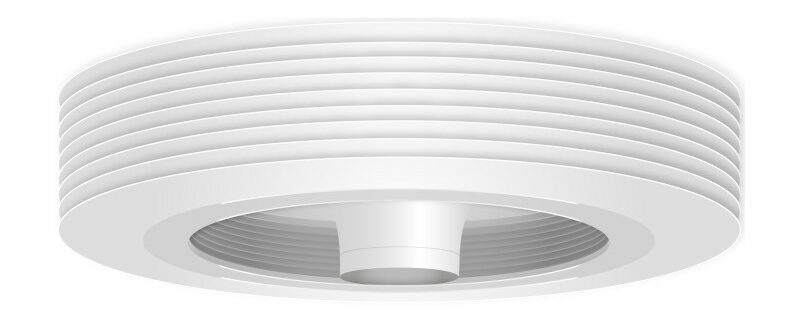
In children’s bedrooms, it is preferable to choose bladeless fans or fans fitted with protective guards to minimise the risk of accidents, such as those from Exhale Fans. These models are particularly suitable for environments where young children may be present. They offer greater safety while maintaining optimal thermal comfort.
The importance of ceiling fan maintenance
Periodic maintenance
A ceiling fan requires regular maintenance to ensure a long service life and correct operation. The blades should be checked periodically to make sure they are not clogged with dust or debris. Such a build-up can reduce the fan’s efficiency and, over time, damage the motor. In addition, a well-maintained ceiling fan is also more energy-efficient.
Checking fixings and components
It is essential to make sure that the fan’s fixings are properly tightened and secure. Any failure in the fixing components can cause excessive vibration and potentially damage the ceiling structure. A professional can check these components regularly to avoid the risks associated with a faulty installation.
Checking the motor
The fan motor should be inspected for any signs of wear, unusual noise or overheating. This helps prevent unexpected and often costly breakdowns and extends the service life of the unit.
Recommendations for installation in special environments
Public environments (schools, hospitals, etc.)
In public spaces such as schools, hospitals and offices, the safety and effectiveness of fans require even closer attention. For example, installations must be designed to avoid any risk of accident, particularly in high-traffic areas. Bladeless models, models with concealed blades or models fitted with a safety guard are often recommended.

High-humidity rooms (bathrooms, kitchens)
Ceiling fans in humid areas such as bathrooms and kitchens must be moisture-resistant. It is essential to install suitable equipment, with a motor specially designed to prevent any risk of short circuit. Particular care must be taken in these cases.
Outdoor spaces (terraces, conservatories)
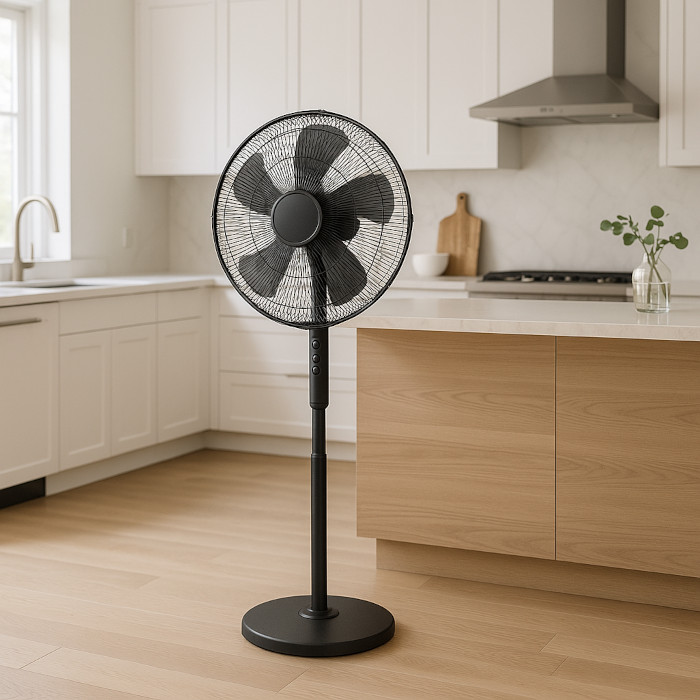
For outdoor installations, ceiling fans must be weather-resistant. A model designed for outdoor use will have extra protection against moisture and harsh weather, ensuring optimal operation even in extreme conditions.

Conclusion
Installing a ceiling fan offers many benefits in terms of thermal comfort and indoor air quality. However, it is vital to strictly follow the safety rules relating to installation height, electrical standards, fixing and maintenance of the unit. By following these recommendations and using qualified professionals, you will ensure safe and optimal use of your equipment.


