
Thermal comfort and energy management
Ceiling fan effectiveness in summer and winter
Fans, and ceiling fans in particular, play an essential role in thermal comfort and energy management all year round. Their ability to regulate perceived temperature, improve air circulation and optimise energy consumption makes them an essential solution in many settings. Whether in a private home, a commercial building, an industrial space or a public building, these devices stand out for their versatility and effectiveness.
Unlike conventional air conditioning or heating systems, which use a great deal of energy to directly change the air temperature, ceiling fans and other types of fan rely on intelligent movement of indoor air. This approach helps to limit temperature variations, optimise how warm or cool occupants feel and reduce energy costs.
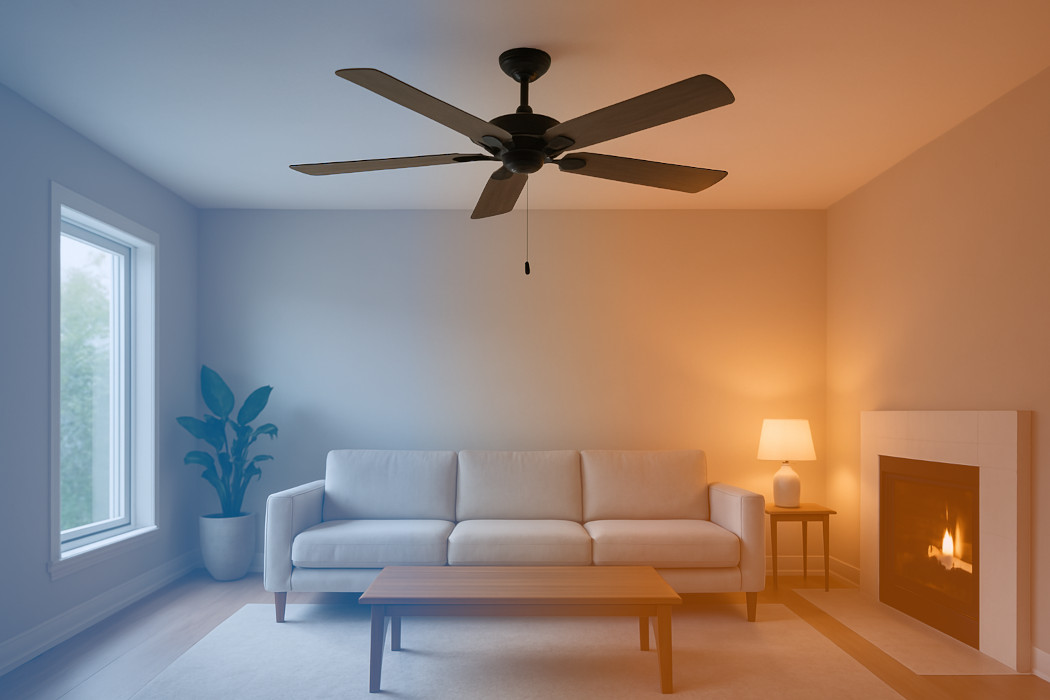
Ceiling fan effectiveness in summer
A cooling sensation through evaporative cooling
Summer can quickly turn enclosed spaces into uncomfortable environments, particularly in regions where temperatures regularly exceed 30°C. The way fans work is based on a simple but remarkably effective natural phenomenon: the evaporation of perspiration.
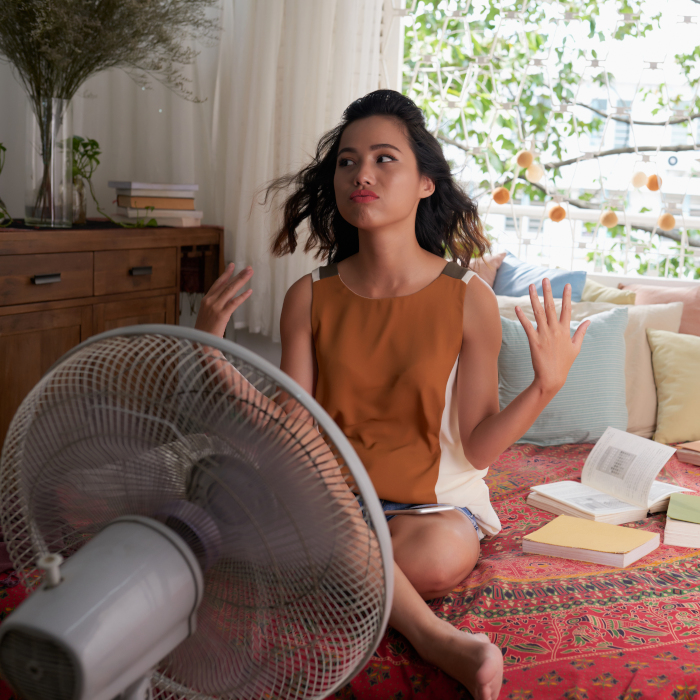
By creating a constant flow of air over the skin, ceiling fans speed up the evaporation of body moisture, producing an immediate cooling effect. Even though the room temperature remains unchanged, it can feel 2–5°C cooler, a significant gain in comfort without excessive electricity consumption.
This effect is particularly welcome in large open spaces, where air conditioning sometimes struggles to maintain an even temperature.
An effective complement to air conditioning to reduce energy consumption
One of the most common mistakes when using air conditioners is setting the temperature too low, which leads to excessive energy consumption and thermal discomfort caused by overly large differences between indoor and outdoor temperatures.
Ceiling fans help to distribute the cool air produced by air conditioning more evenly, avoiding areas of overcooling or stagnant heat. As a result, the air conditioning set point can be raised by 2–4°C without any loss of comfort. This simple adjustment can cut energy consumption by up to 30%, a considerable advantage for businesses, public buildings and households keen to reduce their environmental footprint.
A natural shield against flying insects
In many regions, summer also brings mosquitoes and other flying insects, making evenings uncomfortable, especially in open spaces or near dense vegetation.
The strong airflow generated by a ceiling fan acts as a natural barrier against these pests, which struggle to stay airborne in turbulent air. This makes it an effective, eco-friendly alternative to insecticides and chemical repellents.
Ceiling fan effectiveness in winter
Reducing heat loss and evening out the temperature
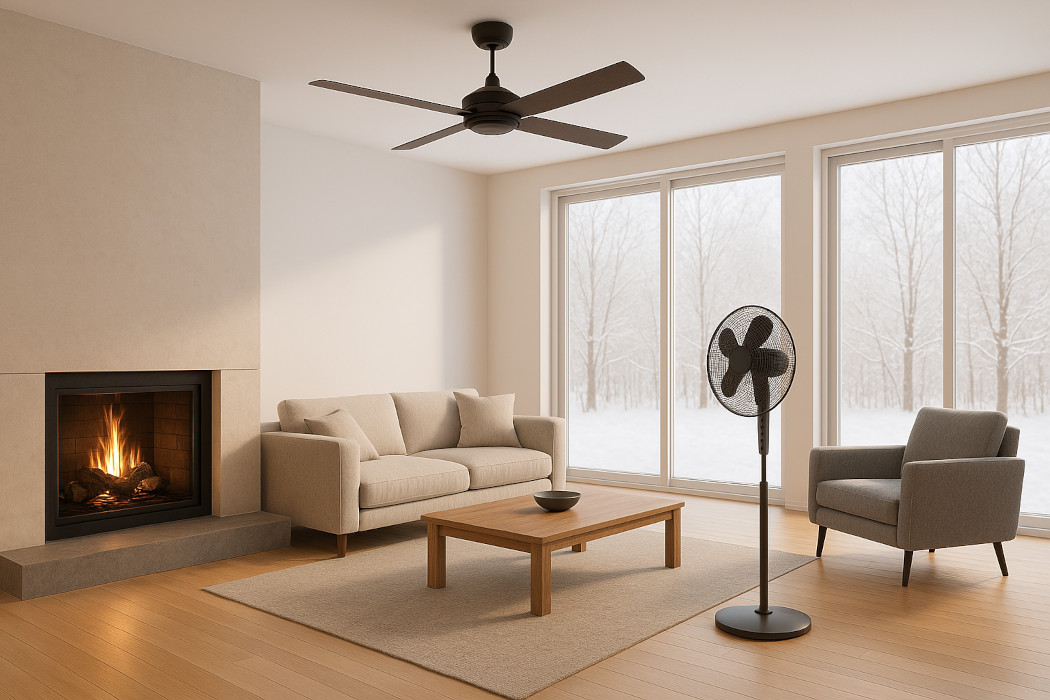
One of the major problems in winter is thermal stratification, which causes warm air to build up at ceiling level, while cooler air remains near the floor. This phenomenon is even more pronounced in rooms with high ceilings, where the heat produced by the heating system collects at the top, leaving occupants in a cooler zone.
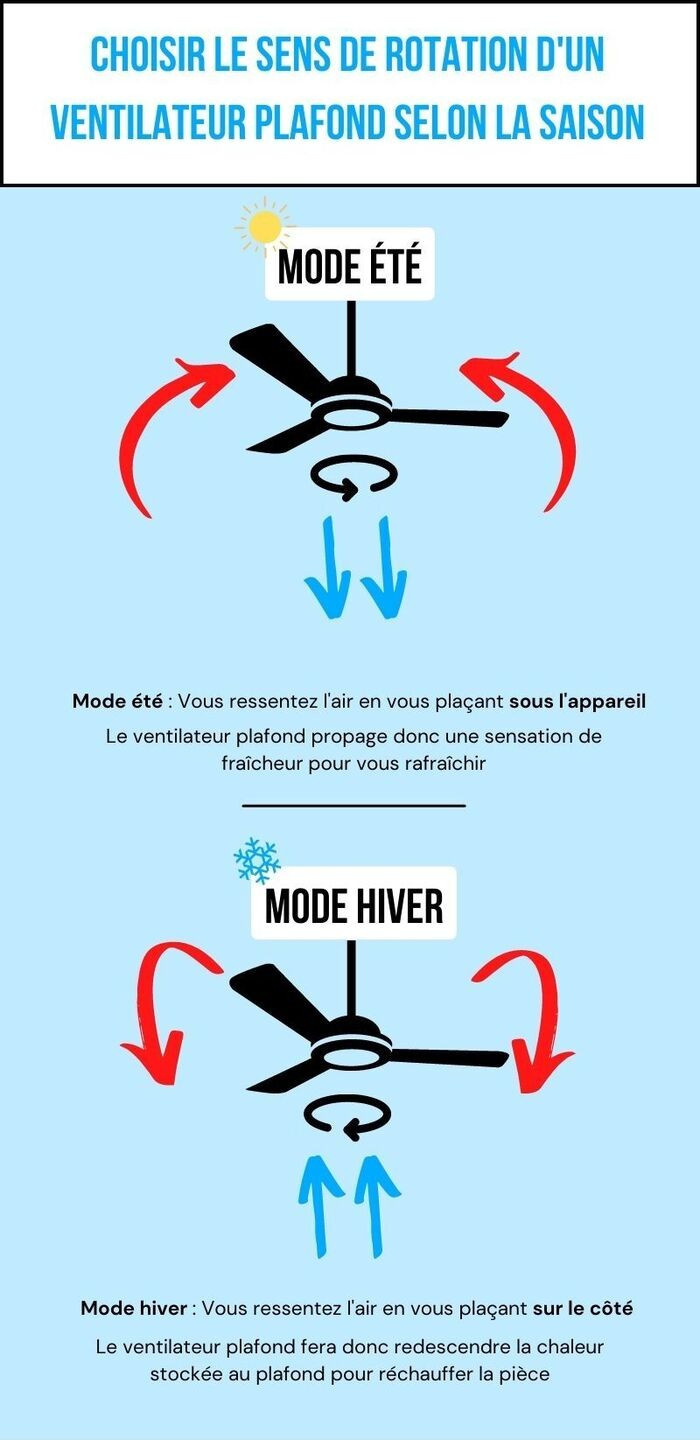
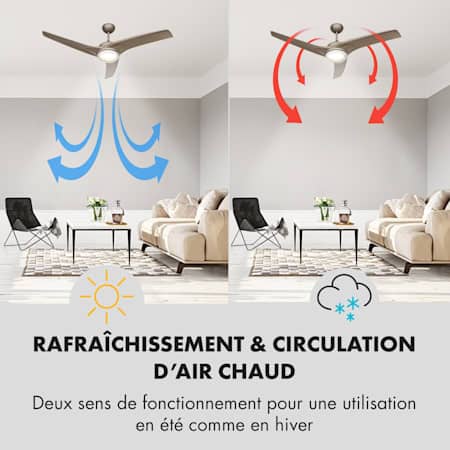
Using a ceiling fan in reverse mode redistributes heat effectively. Unlike summer mode, which pushes air downwards, winter mode reverses the rotation of the blades to draw warm air upwards and gently redistribute it along the walls. This avoids creating cold draughts and ensures an even temperature throughout the room.
A significant reduction in heating requirements
By limiting temperature variations and optimising heat distribution, ceiling fans can reduce heating energy consumption by 10% to 15%. This is a considerable advantage, especially in buildings with electric heating or central heating systems running on gas or oil.
In large commercial, industrial or public spaces, these savings can amount to hundreds or even thousands of euros a year, meaning that an investment in a high-performance ceiling fan quickly pays for itself.
Factors affecting ceiling fan effectiveness
Choosing the right model and size
The effectiveness of a ceiling fan depends largely on its size and position. A ceiling fan that is too small for the room will be ineffective, while an oversized model can generate an airflow that is too strong and uncomfortable.
Large models with wide blades are particularly recommended for large spaces and rooms with high ceilings, while more compact versions are better suited to smaller spaces.
The impact of speed and direction of rotation
The speed setting has a direct impact on how effective a ceiling fan is:
- In summer, a high speed is preferred to maximise the cooling effect.
- In winter, a lower speed is enough to redistribute heat without creating a draught.
Likewise, the direction of rotation is crucial:
- Anticlockwise in summer to push air downwards and create a cooling effect.
- Clockwise in winter to draw air upwards and redistribute it effectively along the walls.
The importance of installation and ceiling height
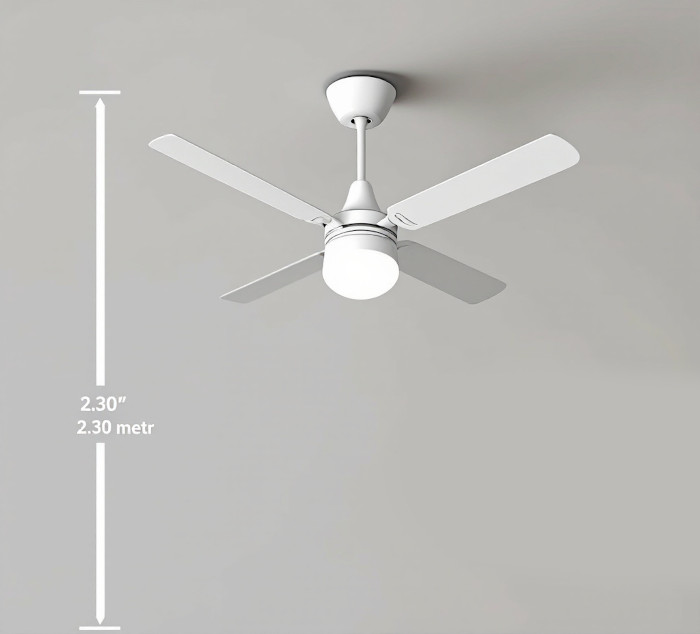
For optimal performance, it is recommended to install the ceiling fan at a height of around 2.30 metres above the floor. For very high ceilings (over 3.50 metres), adding a downrod allows the height of the blades to be adjusted to maximise their effectiveness.
Conclusion
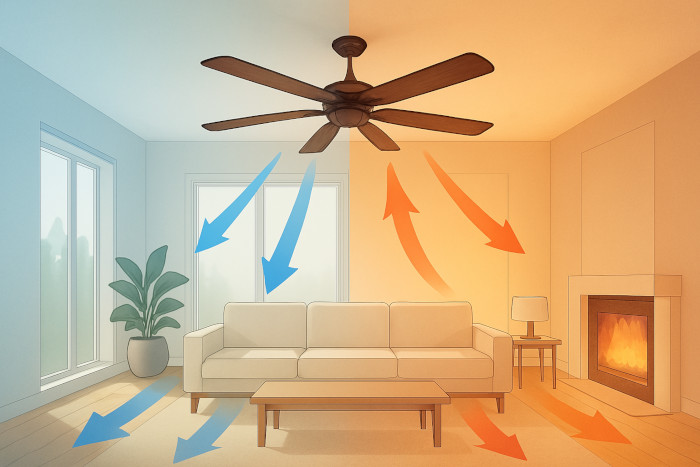
Ceiling fans are a smart, energy-efficient solution for improving thermal comfort all year round. In summer, they provide a natural cooling sensation while reducing reliance on air conditioning. In winter, their role in evenly redistributing heat optimises heating efficiency and delivers substantial energy savings.
Whether in residential, commercial or industrial settings, ceiling fans are an effective alternative to traditional temperature control systems. Easy to install, economical to run and environmentally friendly, they meet the comfort and energy performance requirements of modern buildings.


