
Your guide to choosing the right equipment
Ceiling fans by diameter: how do you choose the right model?
When buying a ceiling fan, one of the most important criteria to consider is the blade diameter. This determines how effectively the unit can ventilate a room, depending on its size. Choosing the right diameter is essential to ensure optimal thermal comfort while avoiding excessive energy consumption.
In this guide, we explain why fan diameter is so important and how to make the right choice based on the floor area of your room. This article will help you better understand the differences between the models available and select the one that best suits your needs, whether you are a homeowner or a professional.
Why is ceiling fan diameter important?
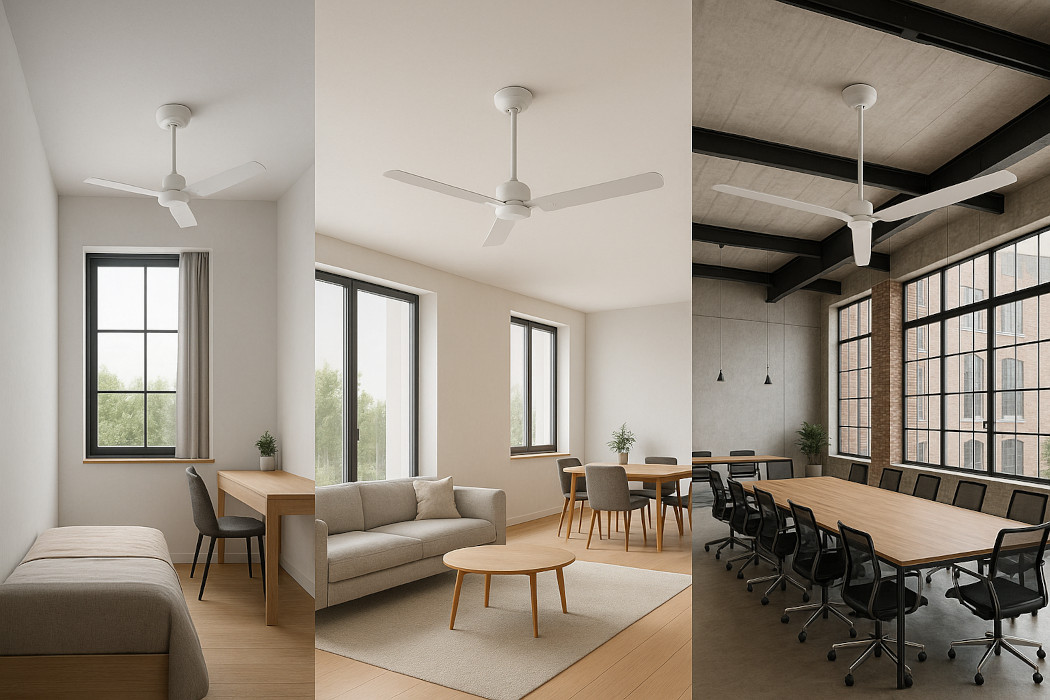
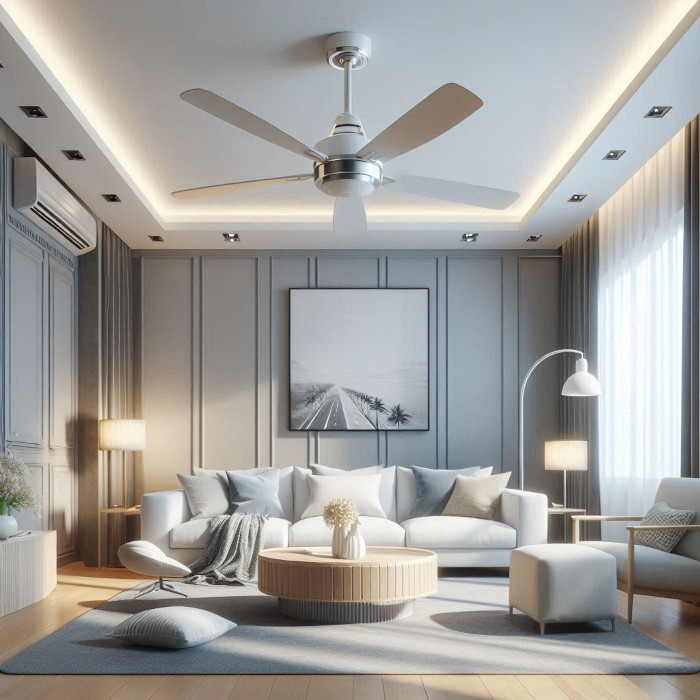
The blade diameter of a ceiling fan has a direct impact on how effectively it moves the air. The larger the fan, the larger the area it can cover and the more evenly it can distribute air throughout the space. The right diameter also ensures the unit works optimally, neither too powerful nor too weak, for constant, pleasant air circulation.
On the other hand, a fan that is too large for a small room can create excessive air movement, making the atmosphere uncomfortable. Conversely, a fan that is too small will not be able to cool or warm the room effectively.
Choosing the right diameter based on room size
Small rooms: under 15 m²
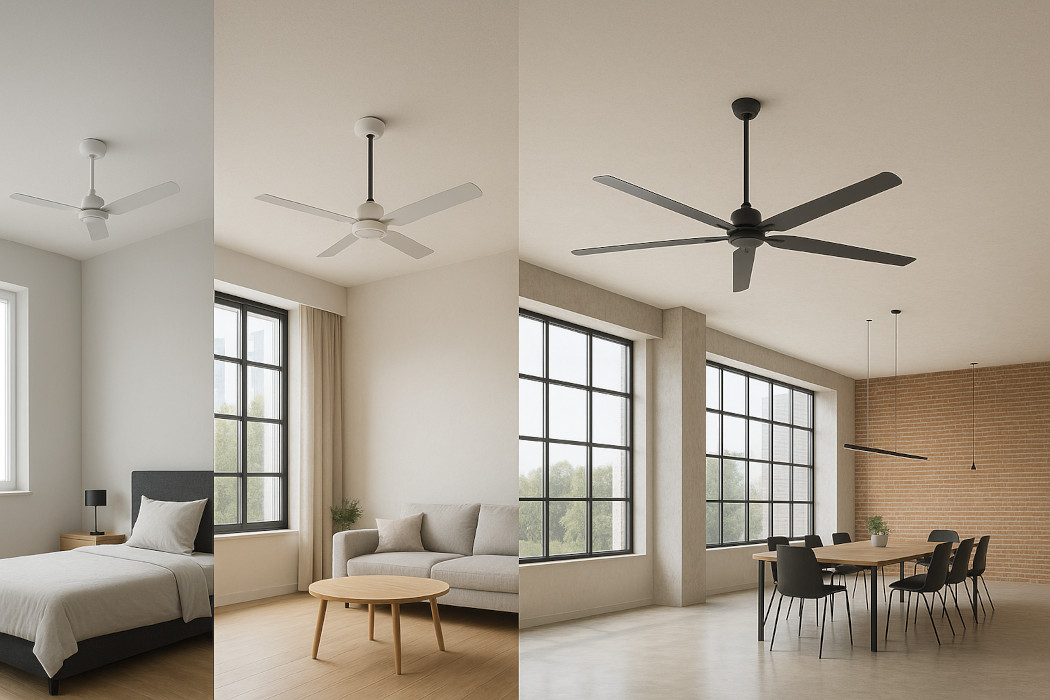
For spaces such as a bedroom or a small office, a ceiling fan with a blade diameter of between 75 cm and 107 cm is generally sufficient. This type of fan is ideal for rooms with a floor area of no more than 15 m². It moves the air effectively without creating an excessive draught, ensuring pleasant thermal comfort.
Recommended diameter: 75 cm to 107 cm
Typical uses: bedrooms, small offices, studio flats
Medium-sized rooms: 15 to 20 m²
If you need to ventilate a medium-sized room, such as a living room or dining room, choose a ceiling fan with a diameter of between 108 cm and 132 cm. This diameter provides better air circulation in slightly larger spaces while remaining quiet and efficient.
Recommended diameter: 108 cm to 132 cm
Typical uses: living rooms, dining rooms, offices, small kitchens
Large rooms: 20 to 45 m²
For more spacious rooms, such as open-plan living areas or large offices, a ceiling fan with a diameter of between 133 cm and 168 cm is recommended. These models are designed to cover larger areas and ensure even air distribution in large spaces.
Recommended diameter: 133 cm to 168 cm
Typical uses: large living rooms, open-plan offices, large kitchens, shared workspaces
Very large rooms: over 45 m²
When dealing with particularly large spaces, such as entrance halls, conference rooms or rooms with high ceilings, more suitable solutions may be needed. These can include larger blades, a fan with a downrod to adjust the suspension height, or even several fans spread across the room to ensure even ventilation.
Ask an expert for advice
Possible solutions: downrod fans, models with larger blades, multiple fans
How do you choose the right fan for each type of room?
The following examples help clarify how to match the type of fan to the specific needs of different spaces. Each choice should take into account the size of the room, the ceiling height, how the space is used and how busy it is, as well as the aesthetic and acoustic constraints of the environment.
- Small rooms: choose a compact fan or an Exhale fan for enclosed rooms.
- Large rooms and open spaces: opt for bladed fans or HVLS models for greater performance.
- Sloping or high ceilings: a downrod fan or an Exhale fan is more suitable.
- High-traffic spaces or spaces with specific requirements: choose powerful, quiet fans that can meet cooling needs while respecting the acoustic environment.
The right fan depends above all on the environment in which it will be installed, but also on how often it will be used and how important design is in the space. Do not hesitate to consult a specialist to choose the model best suited to your specific needs.
1. Open spaces (large volumes, lofts, living rooms)
- Bladed fan
- Characteristics: bladed fans are perfect for open spaces where air needs to circulate evenly. They move air effectively over large areas without concentrating it in a single spot.
- Example: a large living room or a loft with open walls. Choose a fan with a blade diameter of 133 cm to 168 cm to ensure effective coverage.
2. Enclosed spaces (small rooms, offices, bedrooms)
- Exhale fan (vortex effect)
- Characteristics: this type of fan creates an airflow that bounces off the walls, allowing air to be distributed in more confined spaces.
- Example: a small bedroom or an office. A fan with a smaller diameter, between 75 cm and 107 cm, will be better suited to these spaces. The Exhale model will provide optimal ventilation even in a small space.
3. Stairwells or high spaces
- Exhale fan for enclosed stairwells
- Characteristics: in spaces such as stairwells or rooms open over several levels, the Exhale creates a vortex effect that optimises air circulation between floors or around narrower spaces.
- Example: in the central stairwell of a multi-storey house or on a mezzanine, opt for a fan with adjustable blades that will create both vertical and horizontal airflow for better ventilation.
4. Large industrial spaces (hangars, warehouses)
HVLS fan (High Volume Low Speed)
- Characteristics: these fans are designed for large spaces such as hangars, warehouses or other large volumes where powerful, quiet air movement is needed.
- Example: a hangar with high ceilings and a large floor area. An HVLS fan with a very large blade diameter, between 200 cm and 250 cm, is ideal for maintaining a comfortable temperature in these environments.
5. Bars, lounges or design-led spaces
Floor fan
- Characteristics: floor fans are perfect for more design-led spaces where appearance matters as much as functionality. They are often more discreet while providing effective ventilation at low level.
- Example: a modern lounge bar with designer sofas and a minimalist layout. A compact floor fan with smaller blades (75 cm to 107 cm) could be chosen so as not to take up space while ensuring gentle air circulation.
6. Sloping ceilings or mezzanines
Downrod fan
- Characteristics: downrod fans can be installed at varying heights, which makes them ideal for sloping ceilings or spaces with mezzanines.
- Example: a room with a cathedral ceiling or a mezzanine. A downrod fan allows the unit to be positioned at the ideal height, maximising ventilation efficiency.
7. High-traffic spaces (gyms, restaurants, offices)
Bladed fan or HVLS model
- Characteristics: for high-traffic spaces, it is essential to choose a fan that can handle a high airflow while being durable and quiet.
- Example: in a gym, an HVLS model or a powerful bladed fan will be needed to cool the space quickly during classes or intense physical activity.
8. Libraries, meeting rooms or quiet workspaces
Quiet low-speed fan
- Characteristics: in spaces where thermal comfort is needed without creating excessive noise, a quiet low-speed fan is ideal. These fans maintain good air circulation without disturbing quiet environments.
- Example: a library or a meeting room, where noise could be disruptive. Opt for a more discreet, medium-diameter fan that runs slowly to provide a constant, pleasant airflow without distraction.
9. Rooms with large windows (conservatories, sunny living rooms)
Bladed fan or tower fan
- Characteristics: in a room exposed to the sun, the air can become stuffy. A bladed fan ventilates the space, while a tower fan can be more discreet while still providing good air distribution.
- Example: a conservatory or a bright living room with a large picture window. A medium or large fan (108 cm to 168 cm), positioned strategically to maximise air movement.
Other criteria to consider when choosing your ceiling fan
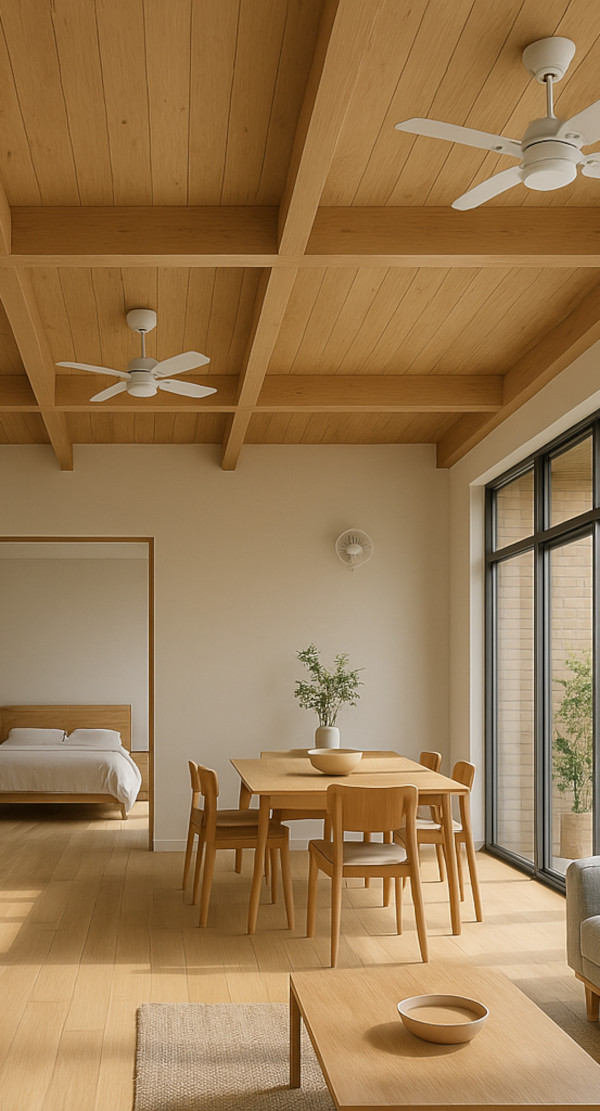
Although blade diameter is one of the main factors, there are other criteria to consider when buying a ceiling fan:
- Power: the larger the area to be ventilated, the more powerful the fan needs to be to ensure even ventilation.
- Design: depending on the style of your room, you can choose models with specific finishes, such as wood, metal or brass effect.
- Controls: modern ceiling fans often offer smart control options, such as remote controls, mobile apps or wall controls.
- Energy consumption: opt for fans with low energy consumption, especially for large rooms.
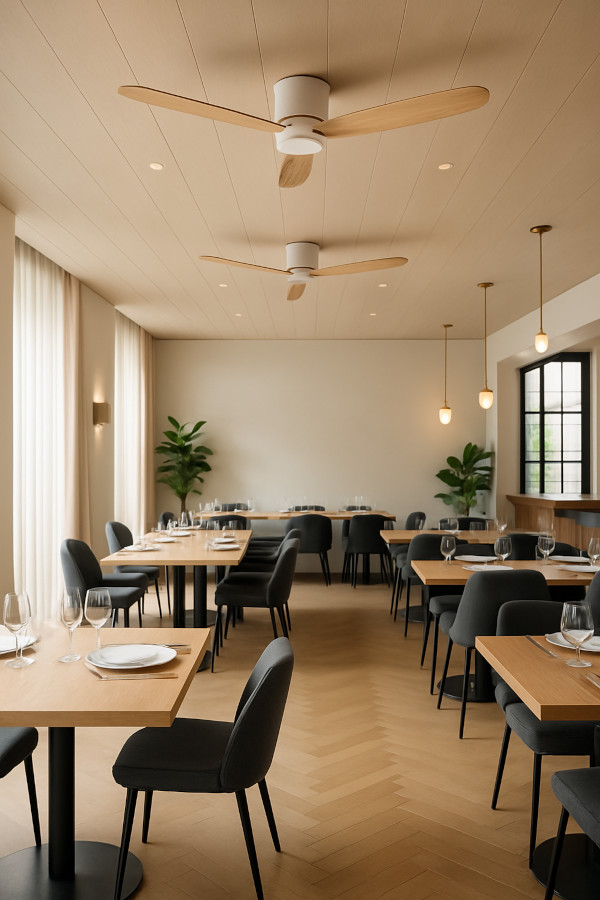
Conclusion: the right diameter for optimal comfort
Choosing the diameter of your ceiling fan depends above all on the size of your room. It is essential to select a model that can ventilate effectively while providing pleasant thermal comfort. By choosing a suitable ceiling fan, you will ensure optimal air circulation and a pleasant environment, whether in a small bedroom or a large open-plan office.
If you are unsure which diameter to choose for a particular room, do not hesitate to consult an expert or ask your supplier for advice. With the right information and advice, you can be sure of making the best choice for your thermal comfort all year round.


